We settle large-loss property damage insurance claims
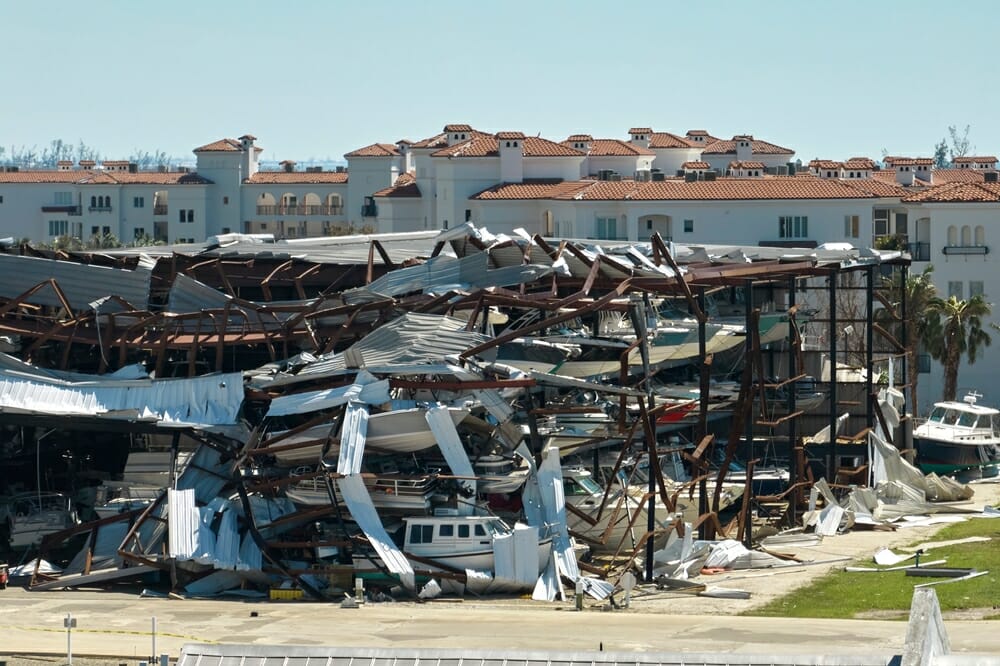
Commercial Claims
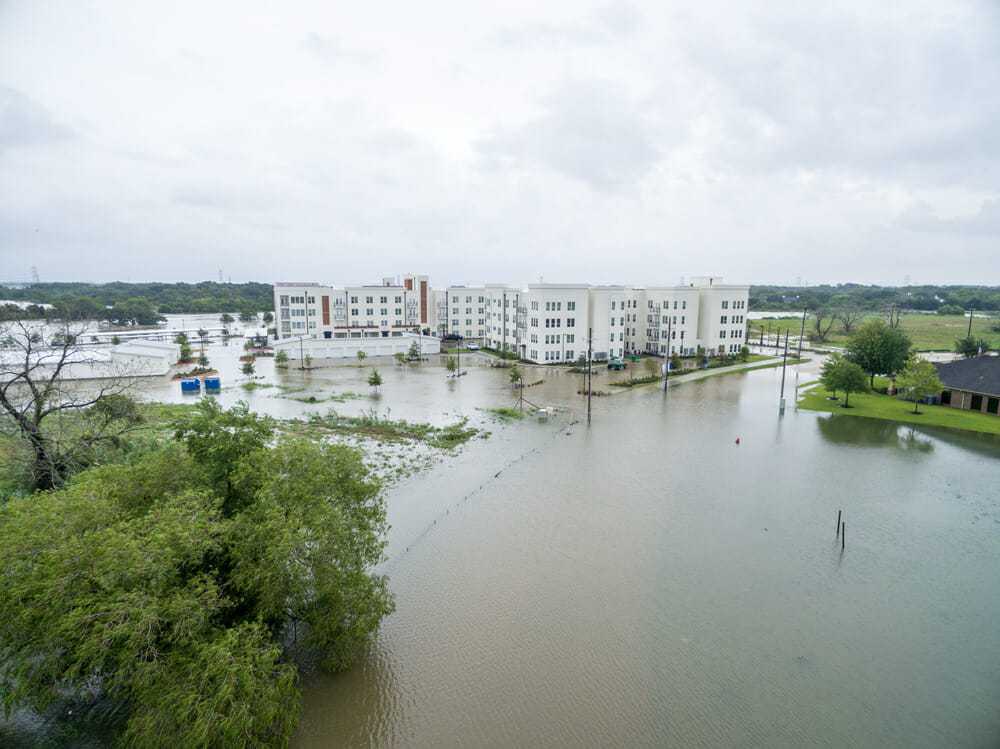
Multi-Family Claims
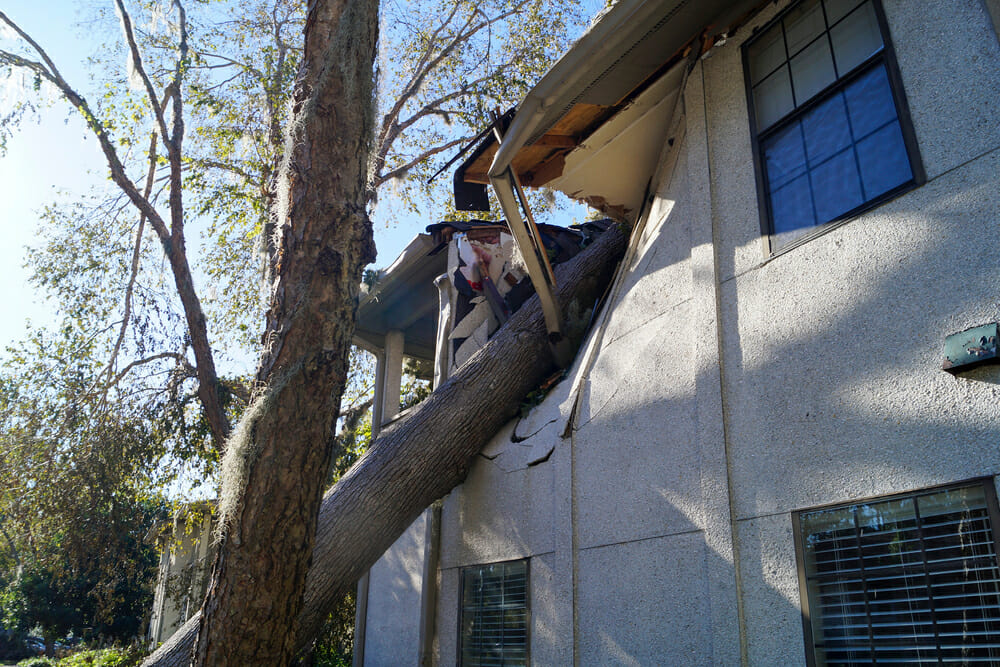
High-Value Home Claims

Insurance Claim Experts
Big Claims Experience, Small Firm Attention
Our Glossary of Property Insurance Claim Terms for Policyholders provides definitions to help you understand the policy language, the claim settlement process, definitions, and jargon including endorsements, coverage, and exclusions. The insurance claim process can be confusing, ambiguous, or even undefined in some policies.
- Commercial Property Claims
- Multi-Family Property Claims
- High-Value Homes & Real Estate Claims
Large commercial and multifamily property damage insurance claims can be highly complex. Hiring the right public adjuster can make a significant difference in your settlement results.
Actual Cash Value (ACV) – Actual cash value is calculated by taking what it would cost to repair or replace your damaged property presently, and subtracting depreciation for factors such as age, condition, obsolescence, the expected lifetime of an item and determining what percentage of that life remains. This percentage, multiplied by the replacement cost, provides the actual cash value. If you have Actual Cash Value (ACV) coverage, your policy will only pay the depreciated cost to repair or replace your damaged property.
Adjuster – A person, usually a salaried employee and/or representative of an insurance company, who settles or adjusts claims.
Admitted or Authorized Company – An insurance company authorized or admitted to do business in a given state.
Agency – A firm, corporation, or one or more individuals acting in association with each other as a single entity. An agency may be a corporation, partnership or sole proprietorship. Also known as business entity.
Agent – An individual licensed and appointed by an insurance company to sell, solicit or negotiate insurance.
Agent, Captive – An agent of a specific insurance company with the responsibility for selling insurance. Represents only one insurance company. Also referred to as exclusive.
Agent, Independent – An agent in business for himself or herself, selling insurance for many different insurance companies. Also referred to as nonexclusive.
Alien Agency or Company – An agency or company organized and domiciled in a country other than the United States.
Appointment – An agreement between an insurer and a licensee authorizing the licensee to represent the insurer in the sale of its insurance products.
Appointment Renewal – Continuation of a producer’s existing appointment based on payment of the required fee.
Articles of Incorporation – A legal document explaining how a corporation is set up, how its officers are elected and guidelines for operation.
Assignment of Commission – Some states allow commission payments to be assigned (made payable) to another party.
Authorized Company Representative – An authorized individual who will license, appoint or terminate licensees on behalf of an insurance company.
Background Investigation – An investigation of an applicant required in some states prior to issuing a license or appointment. Investigations may include criminal history, employment history and credit checks.
Bad Faith – An insurer’s denial of coverage without cause, which can result in extra-contractual damages, punitive damages, or both. An insurer’s intentional or reckless act (extreme or outrageous in nature) or denial of coverage without proper cause, often causing emotional distress and resulting in extra-contractual and/or punitive damages.
Bad Faith Claim – A claim that implies or involves actual or constructive fraud, a design to mislead or deceive another, or a neglect or refusal to fulfill some good-faith duty or some contractual good-faith obligation.
Broker – A term generally used to describe one who places business with more than one company, and who has no exclusive contract requiring that all business be offered to a single company. Unlike an agent, who is considered to represent a company, the broker usually is considered to represent the client.
Broker/Dealer – A firm that acts as an intermediary between buyers and sellers of securities for both the general public and other broker/dealer firms.
Business Entity – A corporation, association, partnership, limited liability company, limited liability partnership, or other legal entity.
Cancellation – Termination of an insurance license or appointment before the end of the license or appointment period.
Carrier – An insurance company. See also Insurer.
Certificate of Completion – A certificate issued by a provider to a student upon the successful completion of either pre-license education or continuing education courses. Also referred to as certificate of compliance.
Civil Authority Additional Coverage – An additional coverage in a business income form, covering loss of business income and/or extra expenses that result when access to the insured’s premises is prohibited by a civil authority because of damage by a covered cause of loss to property other than the insured’s.
Civil Commotion– Any disruption of public order.
Claim – a request made by the insured for insurer remittance of payment due to loss incurred and covered under the policy agreement.
Commercial Property Insurance – Commercial property insurance pays to repair or replace your building and business property damaged by a fire, storm, or other event covered by the policy. It can also pay some of your lost income if your business is unable to operate normally.
Commercial Property Insurance replacement cost vs. actual cash value coverage – Commercial property policies provide either replacement cost coverage, actual cash value coverage, or a combination of both. To be fully protected, make sure your policy provides replacement cost coverage.
- Replacement cost coverage pays to repair or replace your property at current costs. This means the policy will pay enough to rebuild your building and replace your property with new items, even if the cost is more than what you originally paid.
- Actual cash value coverage pays replacement cost minus depreciation. Depreciation is a decrease in value because of wear and tear or age. If you have actual cash value coverage, the policy might not pay enough to fully rebuild your business.
Commission – The portion of the premium stipulated in the contract to be retained by the licensee as compensation for sales, service, and distribution of insurance policies.
Company Adjuster – An employee of an insurer who represents and/or adjusts claims on behalf of that insurer for a salary.
Complaint – A statement that a situation is unsatisfactory or unacceptable. Each state’s department of insurance is in charge of regulating insurance companies that do business in the state. The department of insurance is also in charge of taking consumer complaints and helping consumers get resolution to their insurance problems. Contact Your State’s Department of Insurance
Continuing Education – Education required in some states to renew the license, unless exempt.
Contractual Duties – Insurance contracts contain conditions obligating each party to perform certain duties following the loss. The insured must report the claim promptly, file a sworn statement in a proof of loss, and do other things before the insurer is obligated to pay covered claims. The insurer must investigate the claim promptly and appraise and pay covered claims in a timely manner, either within the time limits specified in the policy or by the time limits set in the applicable unfair claims practices statutes. If an insurer fails to pay a covered claim or negligently denies liability under the policy, the insurer might be liable for breach of contract damages and/or extracontractual damages. Depending on the jurisdiction, contract damages might include prejudgment interest, court costs, other penalties prescribed by statute, and attorney fees, as well as the amount of the loss that should have been paid.
Continuing Education Reciprocity (CER) – Simplified filing method for approving continuing education courses by other states.
Construction organization costs – can include consultants, safety directors, engineers, project managers, superintendents, estimators or other related costs incurred through the construction phase.
Countersignature – Signature of a resident licensee or representative of the insurer on an application for an insurance policy sold by a nonresident licensee necessary to complete the application.
Contract – A signed agreement between an insurer and a licensee outlining what each party is expected to do. Generally the contract specifies the percent of commission the insurer will pay and the amount of insurance the licensee is expected to sell.
Contract of Adhesion – Any unilateral contract in which one party is put in a “take-it-or-leave-it” position and must either accept the contract as written by the other party or reject the contract entirely.
Corporation – One or more individuals operating under the articles of incorporation as a single business. Corporations typically have officers and a board of directors.
Credit Report – A report obtained from a professional reporting company on the financial status of a licensee or applicant. A type of background investigation.
Damages For Loss Of Use – These are the awards that are made in order to compensate for loss of the use of something that would ordinarily earn money.
DBA – Doing business as, usually referring to a person or firm doing business under another firm name.
Designated Responsible Licensed Producer – An individual in an agency who is responsible for the conduct of all the agency’s licensed members and all transactions of the agency.
Detrimental reliance— When an insured Policyholder relies on the words or actions of an insurer and that reliance harms the insured’s financial position. This is a situation that exists when an insured relies on the insurer’s or adjuster’s representations that cause the insured to change his or her position about the policy, incur an expense, or be led to breach a policy condition. When this happens, the insurer could be stopped from asserting a coverage defense or claiming a right or privilege because of this conduct toward the insured. In other words, the insured “relies detrimentally” on the insurer’s conduct
Direct – Stemming immediately from a source.
Disruption – the act or process of disrupting something : a break or interruption in the normal course or continuation of some activity, process, etc.
Doctrine of Adhesion- is applied whenever there is an ambiguity in the wording or language in an insurance policy, and the interpretation it is resolved in favor of the policyholder
Domestic Agency or Company – An agency or company formed under the laws of the state in which the insurance is written.
Errors & Omissions (E&O) Liability – The liability a producer assumes, by the fact of doing business, for errors or omissions he or she may commit in recommending, providing, continuing, or failing to provide or continue the insurance coverage clients require. Producers can protect themselves by purchasing E&O Liability coverage.
Estoppel –An adjuster’s or insurer’s conduct might result in estoppel. For estoppel to occur, the insured must rely on the insurer’s conduct. The insured might change his or her position about the policy, might incur some expense, or might be led into breaching a policy condition as a result of relying on the representations or conduct of the adjuster or insurer. This situation is called detrimental reliance. To permit an insurer to assert a coverage defense in such cases would be improper. Estoppel prevents an insurer from claiming its right, privilege, or defense if it would be inequitable to do so because of the insurer’s conduct toward the insured.
Q: Waiver and estoppel can be confusing, and the terms themselves can be confused with each other. What’s the difference?
A: Waiver is the voluntary relinquishment of a known right. For example, if you submit an application for insurance that is incomplete, and the insurer does not ask you for the additional information, the insurer may have waived its right to deny benefits based on the missing information.
Estoppel is an action imposed to prevent (estop) an insurer from asserting a policy provision because of some action, such as misleading an insured to do or not do something. If an insurer routinely accepts late payments, it may be estopped from allowing your policy to lapse because of a future late payment, because the insurer led you to believe that late payment was not a basis for letting your policy lapse.
Ensuing loss – The loss attributable to a subsequent peril that results from loss by an initial peril.
Fingerprints – A process of checking an applicant’s fingerprints for possible criminal history as required in some states prior to issuing a license.
Financial Institutions – A national bank, state bank or savings association. Credit Unions are generally not considered to be financial institutions.
Financial Responsibility – Some states require licensees have a surety bond, errors and omissions liability coverage or some other insurance department-approved financial arrangement in case a client files a legal complaint against the licensee.
First-Time Applicant – An applicant for an insurance license that has never held a resident license before in the state and must meet that state’s license requirements. A resident individual in this category must pass the license exam. First-time applicants have not yet been appointed.
Foreign Agency or Company – An agency or company organized under the laws of a state other than the one where insurance is written.
General Agent (GA) – A person, firm or corporation having authority to supervise, hire and terminate producers for one or more insurers. General agents are paid a commission or fee.
Some general agents are given authority to perform other administrative functions normally handled by an insurer such as claim payments, premium billing, verifying coverage and so on. General agents are also authorized to sell, solicit or negotiate insurance.
General Conditions – the invisible or indirect costs needed for a project. General conditions can be divided into three types— pre construction costs, construction organization costs, and project operations costs. These are sometimes referred to as soft costs.
Good-faith claims handling – The manner of handling claims that requires an insurer to give consideration to the insured’s interests that is at least equal to the consideration it gives its own interests.
Gramm-Leach-Bliley Act (GLB) – A federal law adopted in 1999 that required states to develop either a reciprocal or uniform approach to nonresident insurance producer licensing by November 12, 2002.
Home Office – The place where an insurance company maintains its chief executives and general supervisory departments.
Home State – The District of Columbia and any state or territory of the United States in which an insurance producer maintains his or her principal place of residence or principal place of business and is licensed to act as an insurance producer.
Indemnity – To restore a party who has sustained a loss to the same financial position that party held before the loss occurred.
Independent Adjuster – One who represents and/or adjusts losses on behalf of insurance companies but is not on their payroll. The independent adjuster is paid by a fee for each loss adjusted, as distinguished from a company adjuster who is paid a regular salary by one insurance company.
Insurance Commissioner – Common title for the head of a state department of insurance. In some states, known as the director or superintendent.
Insurance Department – A governmental bureau in each state or territory (and federal government in Canada) charged with administration of the insurance laws, including licensing, examination, and regulation of producers and insurers. In some jurisdictions, the department is a division of some other state department or bureau.
Insurance Producer – A person required to be licensed under the laws of this state to sell, solicit or negotiate insurance.
Insured – The party who purchases insurance from an insurer who agrees to provide benefits or services.
Insurer – The party that undertakes the losses or provides benefits or services. Also called the insurance company and sometimes insurance carrier.
Letter of Clearance – Usually computer-generated letter stating an individual held a resident license in his or her former home state but has now canceled the license. Letter also states license type and line(s) of insurance for which the individual was licensed. Insurance departments generally require original letter. Letter required for resident applicants who have relocated from one state to another state.
Letter of Good Standing – A letter generally issued by the Secretary of State’s office showing an agency is in good standing in the resident state. The letter may also be referred to as certificate of good standing or certificate of existence.
License – An agreement between a licensee and a state insurance department authorizing the licensee to sell insurance under the guidelines established by the insurance laws of that state.
Licensee – An individual or business entity that holds a valid license and is appointed by an insurer to solicit, negotiate or procure insurance.
License Application – An application form that must be completed in order to obtain a new license, an additional license, or a license reinstatement.
License Examination – A requirement for all resident applicants who wish to qualify for an insurance license, unless exempt.
Limited Liability Company (LLC) – A type of organization that has characteristics common to both corporations and partnerships. Organization must have two or more members having equal status and where no member is personally liable for the debts of, or claims against the organization.
Limited Lines Producer – A person authorized by the insurance commissioner to sell, solicit or negotiate limited lines insurance.
Limited Lines License – Usually refers to a license that limits the licensee to selling a particular line of insurance. In some states, this license type has more lenient qualifications than a standard lines license.
Loss – The harm or privation resulting from loss or separation.
Managing General Agent (MGA) – A person, firm, association or corporation having authority to supervise, hire and terminate producers for an insurer. MGAs are paid a commission or a fee. MGAs have more administrative authority than general agents and sell, solicit or negotiate insurance either directly or indirectly. They may also negotiate reinsurance for insurance companies.
Market Regulation Handbook – A handbook developed by the NAIC Market Regulation Handbook Working Group that contains guidelines for market regulation examinations and investigations including different options for investigation techniques, called the continuum of regulatory responses.
Mutual Company – An insurance company owned by the policyholders.
Name Approval – Official name, assumed name, or trade name of an agency on file and approved by the insurance department as required in some states.
NAIC (National Association of Insurance Commissioners) – An association of state insurance commissioners in the 50 states, District of Columbia and four U.S. territories that is organized for the purpose of exchanging information and working toward uniformity of insurance regulation.
National Flood Insurance Program (NFIP) – The NFIP is federal program administered by FEMA enabling property owners in participating communities to purchase insurance as protection against flood losses. Individuals selling flood insurance must be licensed as an insurance producer.
National Producer Number (NPN) – The NPN is a unique identification assigned by the NIPR that identifies each entity in the State Producer Licensing Database.
Negotiate – The act of conferring directly with or offering advice directly to a purchaser or prospective purchaser of a particular contract of insurance concerning any of the substantive benefits, terms or conditions of the contract, provided that the person engaged in that act either sells insurance or obtains insurance from insurers for purchasers.
National Insurance Producer Registry (NIPR) – NIPR is a nonprofit affiliate of the NAIC. The purpose of NIPR is to work with the states and the NAIC to reengineer, streamline and make more uniform the producer licensing process for the benefit of regulators, the insurance industry and consumers.
Nonresident License – A license issued to an individual who is not a resident of that state.
Notarized – A notary public must witness the signing of a form or document.
Overhead – Refers to operating expenses associated with running a business that can’t be linked to any specific business activity. It can include rent or mortgage, utility costs, administration and legal expenses, office supplies, employee training, business development, insurance costs, or any other expenses related to office operations.
Override Commission – A commission paid to an agency or individual for a percent of business produced by its licensees.
Partnership – Several individuals acting under a partnership agreement as a single business. Generally two or more individuals own and operate the business jointly.
Partnership Agreement – A legal document specifying a business is jointly owned and specifying the legal and business arrangements of the partners.
Person – An individual or a business entity.
Physical – Having material existence : perceptible especially through the senses and subject to the laws of nature.
Preconstruction costs – Can include document review, estimating, contract negotiations, scheduling, project managers, and any other costs related to the planning that takes place before actual construction begins.
Pre-license Education – Education or training required in some states prior to taking a license examination to qualify for a resident license.
Profit – The difference between the amount earned and the amount spent. Many contractors factor it into their estimates as a percentage of the total cost of the project. This percentage can vary between contractors as they seek to be competitive. Many factors play into determining profit percentage, including project cost, timing and duration of the project, risk factors, taxes, financing, as well as the contractor’s workload.
Project operations – includes temporary toilets, dumpsters, permits, job trailers, telephones, temporary power, site signage, security, vehicles and equipment, or any other cost related to project operations.
Proof of Loss – A proof of loss is a formal document you must file with an insurance company that initiates the claim process after a property loss. It provides the insurer with specific information about an incident – its cause, resulting damage, and financial impact.
Power of Attorney/Service of Process – The written document that allows the insurance commissioner to receive legal complaints filed against a nonresident licensee.
Producer Database (PDB) – An electronic database of insurance producers containing license and appointment information. Every state participates in the PDB and reports information to this central repository.
Producer Licensing Model Act (PLMA) – A model act adopted by the NAIC to update and standardize many aspects of state producer licensing.
Producer Licensing Working Group (PLWG) – NAIC working group charged with creating and monitoring uniform licensing standards and providing guidance to state insurance licensing departments.
Property Damage – Physical injury to, destruction of, or loss of use of tangible property.
Property Insurance – Any type of insurance that indemnifies an insured who suffers a financial loss because property has been lost, stolen, damaged, or destroyed.
Proximate Cause – A cause that, in a natural and continuous sequence unbroken by any new and independent cause, produces an event and without which the event would not have happened.
Public Adjuster – A public adjuster is an independent, licensed, private and professional claims adjuster who represents and adjusts losses on behalf of insured policyholders, typically on a contingency fee. The public adjuster is the only type of adjuster who can legally represent the interests of and are legally authorized to act on behalf of an insured policyholder to investigate, negotiate, advise, adjust, settle claims for loss under any policy of insurance covering real or personal property.
Qualified Licensee – An individual or agency who already holds a license and has met the license requirements in a specific state. A qualified licensee is already appointed to represent a company and wants to be appointed by new or additional insurers.
Reciprocal Agreement – A mutual agreement between two states whereby producers of each state can sell insurance in the other state.
Reinstating A License – A lapsed license may be reactivated in some states without repeating the pre-license education and license exam requirements, as long as it is done within a defined time period. Also applies to agencies.
Reinsurance – Agreement between insurance companies under which one accepts all or part of the risk for the other.
Reinsurance Intermediaries – A reinsurance intermediary acts as a broker in soliciting, negotiating or procuring the writing of any reinsurance contract or binder. Reinsurance Intermediaries act as insurance producers in accepting any reinsurance contract or binder on behalf of an insurer.
Reinsurers – Insurers that accept all or part of the risk of another insurer.
Rejection – The refusal of an application or fee for license or appointment by the insurance department.
Renewal – Continuation of the license or appointment beyond the original date of expiration. Renewals vary from annually to every four years.
Resident License – A license issued to an individual who lives in the state where the license is issued.
Retaliatory – Usually pertains to licensing fees. Retaliatory fee is the higher of the home state fee or the nonresident state fee.
Revocation – A license that is terminated because the licensee has violated insurance laws or for unethical behavior.
Regulatory Information Retrieval System (RIRS) – A database maintained by the NAIC which includes information filed by states to report formal administration actions.
Riot and Civil Commotion – Any disruption of public order.
Risk management – The process of making and implementing decisions that will minimize the adverse effects of accidental losses on an organization that enable an organization to optimize its level of risk.
Risk Purchasing Groups – Operates under federal law. RPGS are only allowed to place liability coverage. RPGs are purchasing entities, not insurers, formed to pool purchasing power on similar risks and are not generally subject to state insurance laws.
Risk Retention Groups – Formed as a result of the Risk Retention Act of 1981, a federal law that enables licensed insurers to form risk retention groups in order to provide group self-insurance. RRGs are fully regulated in one state pursuant to that state’s laws. RRGs are limited to providing non-workers’ compensation.
Sell – To exchange a contract of insurance by any means, for money or its equivalent, on behalf of an insurance company.
Service Representative License – License issued to an individual employed by and paid a salary by an insurer, managing general agent or general agent. Service Representatives work in the field with licensees to assist them in negotiating, procuring or soliciting insurance.
Sole Proprietorship – One individual who owns and operates a business.
Solicit – Attempting to sell insurance or asking or urging a person to apply for a particular kind of insurance from a particular company.
Solicitor – An individual licensed and appointed by an agent to solicit and receive applications for insurance as a representative of the agent.
Sponsoring Insurance Company – The insurer a licensee represents in the sale of insurance products.
Stamping Offices – Non-profit non-governmental agencies whose offices act as a liaison between the surplus lines producer and the state insurance department. Stamping office duties vary among the various states in which they exist. Responsibilities may include evaluation of insurance companies for inclusion on a white list, review of surplus lines policies, and education. Stamping offices are funded by stamping fees assessed on each policy of surplus lines insurance written in the state.
State of Domicile – State in which insurer or agency was organized and founded.
Superintendent – The title of the head of the department of insurance in some states. See Insurance Commissioner.
Surety – An insurance or bond that covers obligations to pay the debts of, or default of another, including faithlessness in a position of public or private trust.
Surplus Lines Insurance (SLI) – Products are sold by authorized non-admitted companies. SLI companies provide access to products not available in a state.
Surplus Lines Broker License – License issued to a person or firm to place risk insurance with eligible surplus lines insurers.
Suspension – A license that is temporarily invalid pending a decision by the commissioner because a licensee has violated insurance laws or for unethical behavior.
Temporary License – A resident applicant may apply for and receive a temporary license in some states prior to meeting the pre-license education and license examination requirement.
Termination for Cause – The cancellation of the relationship between an insurance producer and the insurer for one of the reasons listed in Section 12 of the PLMA.
Terminated License – A license that has been cancelled suspended or revoked. See Cancellation, Revoked and Suspended.
Third-Party Administrator (TPA) – An organization or firm that administers self-insured funds or multiple employer trusts.
Title Agents – Functions of title insurance agents include conducting title searches, performing underwriting functions, preparing and issuing title insurance commitments and policies, maintaining policy records, and receiving premiums. In addition, many title agents perform real estate closings, and provide settlement and escrow services.
Uniform Application – Applications developed by the PLWG available for resident and nonresident producer licensing, business entities, adjusters and Third Party Administrators.
Uniform Licensing Standards (ULS) – Set of standards adopted by the Producer Licensing Working Group for the purpose of implementing uniform standards among the states.
Utmost good faith– An obligation to act in complete honesty and to disclose all relevant facts.
Waiver– is the voluntary and intentional relinquishment of a known and existing right. This surrender of a known right can be made expressly or by implication. It can be oral, written, or inferred through any conduct of the adjuster or insurer inconsistent with a particular right.
- The circumstances under which a waiver can occur are varied. For example, whenever the adjuster or insurer makes an unconditional offer to pay a claim after becoming aware of a coverage defense or a basis for denying liability, the insurer waives its right to deny the claim. This is true regardless of whether the coverage defenses concern a right to rescind the policy because of misrepresentation in the insurance application, a cancellation of coverage before the loss, or the lack of coverage for the loss. Payment or an offer of settlement waives a defense based on fraud and concealment.
- Waiver can also occur following a claim denial. The insured might allege that the insurer, upon denial of the claim, breached its obligations, thereby waiving the continued application of the policy conditions. The insured would therefore be relieved of any further obligation to comply with the conditions.
- The adjuster or insurer can waive the insured’s compliance by offering to pay the loss before the insured has complied with the conditions. In some jurisdictions, the insurer waives the proof of loss condition by failing to provide or request a proof of loss within the time limits established by the insurance code. In some jurisdictions, a claim investigation in which the adjuster obtains a detailed statement from the insured covering the facts and extent of loss waives the proof of loss and examination under oath conditions. The insurer is deemed to be fully informed of the information required to be produced by these conditions.
- A waiver of the insurer’s option to repair or replace the property can occur when the insurer elects to pay the claim in money or enters into a formal appraisal of the amount of the loss. Making payment or initiating appraisal also waives any coverage defenses unless the insurer expressly advises the insured that it is reserving its rights to investigate further and assert policy conditions.
These are examples of conduct that can waive the insurer’s rights:
- Making an unconditional offer to pay a claim after becoming aware of a coverage defense or a basis for denying liability—The insurer then waives its right to deny the claim.
- Denying a claim—The insured could allege that the insurer breached its obligations, thereby waiving any continuation of the policy. The insured would therefore be relieved of any further obligations.
- Offering to pay the loss before the insured has complied with the conditions—If the insured has not provided a proof of loss, the insurer may be considered fully informed and thus waives the proof of loss condition.
- Paying a claim or initiating an appraisal—This action can waive any additional right of the insurer to investigate further and assert policy conditions.

Years Experience
Claims Settled
Hours Worked
Average Claim Amount
Risk-Free Loss Recovery Offer
Get a complimentary consultation on your damage insurance claim. We are public claim adjusters who work for policyholders, not the insurance company. If you choose to hire us, we work on contingency. No recovery, no fee. Our insurance claim process is proven and streamlined. We also value your privacy. We do not sell, trade, or rent your personal information to others.
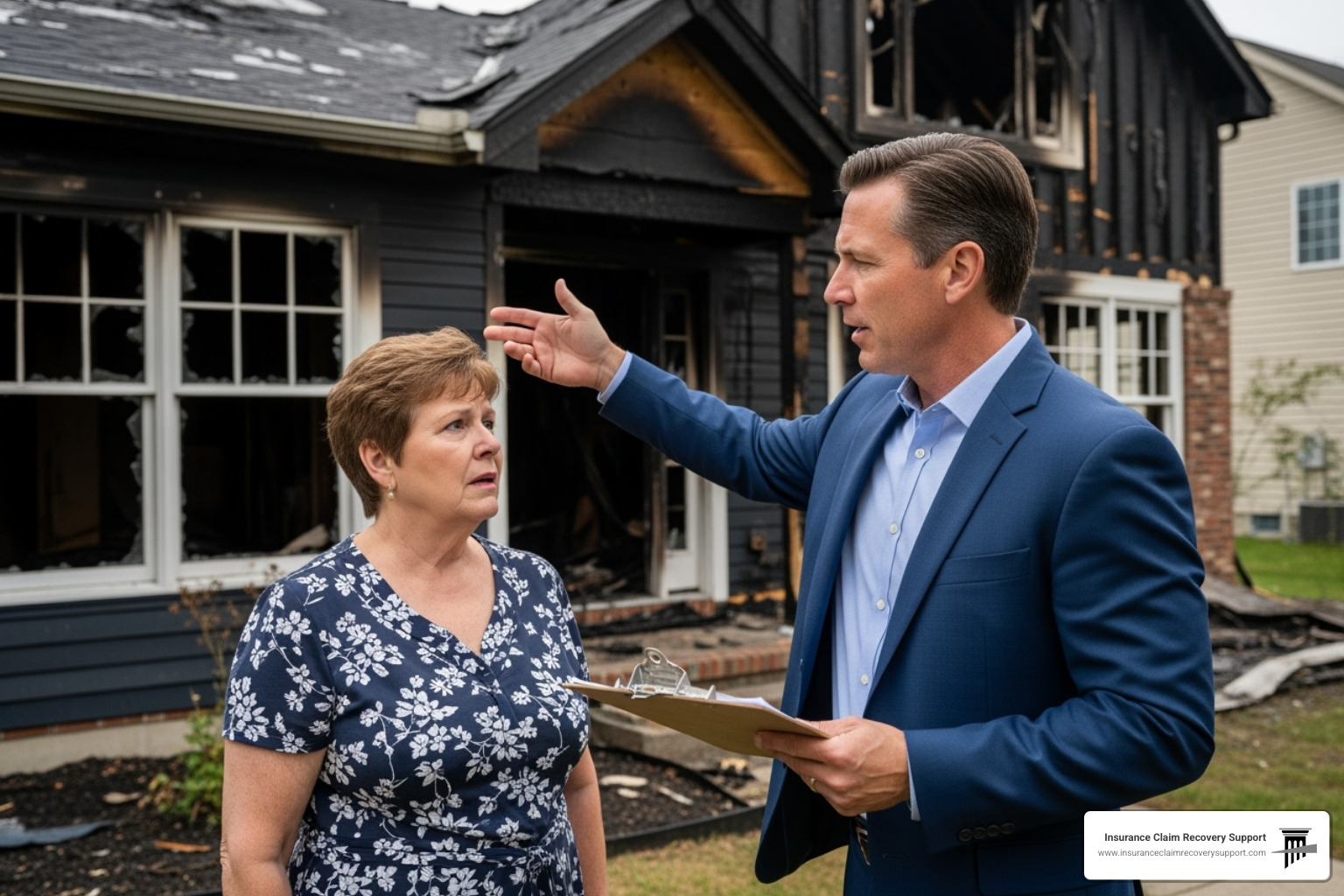
Need immediate fire damage insurance claim help?
TESTIMONIALS
What Client Says About ICRS
Trustindex verifies that the original source of the review is Google. Scott and his entire team so incredibly knowledgeable, their is no way we could have accomplish what we did without their guidance. Keep us the great work!!!!!Posted onTrustindex verifies that the original source of the review is Google. Outstanding service experience!!!Posted onTrustindex verifies that the original source of the review is Google. They are truly a Lifesaver! I cannot say enough good things about Insurance Claim Recovery Support — they truly feel like earth angels. Misty and Scott helped me through one of the most overwhelming and helpless times of my life. As a single woman dealing with major home renovations after a severe water leak, I was unfortunately taken advantage of by a dishonest contractor. From breaking my TV and not saying a word, to lying about repairs, damaging my sprinkler, inflating estimates with bogus charges, and even threatening legal action — I was completely overwhelmed. That’s when Misty and Scott stepped in. Their knowledge of the laws and the insurance claims process is unmatched, and their compassion and support were exactly what I needed. They knew exactly how to handle the situation, empowered me with the facts, and guided me every step of the way. They genuinely listened, made me feel heard and understood, and stood by my side when I needed it most. I am beyond grateful for their integrity, expertise, and kindness. If you’re facing a tough insurance claim situation, do not hesitate to reach out to them — they are absolute professionals and true advocates and helped me feel safe in my own home again.Posted onTrustindex verifies that the original source of the review is Google. Not sure how Misty has 5 stars here. She won’t even return a call or email.Posted onTrustindex verifies that the original source of the review is Google. I spoke with Scott about a commercial claim, and he was incredibly helpful. He provided detailed explanations about how policies and adjustments work, making everything much clearer. I really appreciated his thoroughness and knowledge!Posted onTrustindex verifies that the original source of the review is Google. After a nightmare experience dealing with an underpaid commercial property insurance claim from a hailstorm in Dallas, we were fortunate enough to find Scott and Misty Friedson at Insurance Claim Recovery Support (ICRS). Had we not hired them, we would’ve left $127,000 on the table - money we didn’t even know we were owed. Scott and Misty are absolute professionals. Their knowledge of the insurance claim process is unmatched, and they navigated our case with skill, integrity, and relentless attention to detail. On top of that, they’re HAAG certified roof inspectors, which made all the difference in proving the true extent of our damages. Looking back, we wish we had hired ICRS from the very beginning. It would have saved us so much stress, time, and lost money. If you’re dealing with an insurance claim - especially a commercial one - don’t wait. Call ICRS. We’re beyond grateful for everything they did for us.Posted onTrustindex verifies that the original source of the review is Google. ICRS has been a beacon of hope during one of the most challenging times in my life. After my home was struck by lightning nearly nine months ago, dealing with USAA has been nothing short of a nightmare. They have grossly underpaid my claim, and I was at my wit’s end after countless hours of research, discussions with attorneys, and trying to figure out how to rebuild my home without compromising my financial future. Scott and Misty from ICRS have been the most honest, supportive, and knowledgeable people I’ve encountered throughout this ordeal. They made me feel heard and understood, which was a welcome relief after so many interactions with professionals who seemed more interested in their bottom line than in helping me. Scott guided me through this incredibly complex and stressful process with expert advice, giving me the clarity and confidence I desperately needed. His and Misty’s commitment to doing what’s right for their clients is unmatched. They genuinely care and provide guidance and support that feels personalized and sincere. Thanks to Scott and Misty, I’m back on track and no longer feel overwhelmed. ICRS has saved me countless hours of stress and struggle, and I wholeheartedly recommend them to anyone dealing with a large-loss claim after a storm. Trust me—making them your first call can save you immeasurable frustration and help you navigate this difficult path with sound advice and unwavering support. Thank you, Scott and Misty, for everything you’ve done! -Jason CheshirePosted onTrustindex verifies that the original source of the review is Google. Found this firm very responsive with honest advice. Based on our discussion, I actually did not hire them, at least yet, because my claim doesn't require the service. They easily could have pushed to sign me up, but did not. We have just gone thru flooding of our home and it is appreciated not being taken advantage of now.Posted onTrustindex verifies that the original source of the review is Google. Amazing service and results!Posted onTrustindex verifies that the original source of the review is Google. In 2023, our family woke up to a nightmare. Our house was filled with smoke and on fire. We able to get our son and pets out of the burning house without injury, and our local fire department arrived quickly and put out the fire. By the time that the fire was out, most of our home was destroyed. We contacted our insurer to start a claim and were immediately met with opposition and confusion on their part. It took several weeks for them to assign an adjuster to our claim. This initial experience led our decision to hire a Public Adjuster to navigate the process and advocate on our behalf. We couldn’t trust that our insurer would handle the claim responsibly, and we quickly realized that we needed someone to fight for us to hold them accountable to our policy. We were extremely fortunate to find ICRS and secure Scott as our Public Adjuster. Our Insurer mislead us and withheld information. It took weeks for them to provide a copy of our policy, and when they did, they excluded information that benefited us. ICRS pressured them to provide a full copy of our policy which included the benefits they had initially excluded. Our Insurer provided a scope that was not aligned with the actual cost of rebuilding our home. ICRS countered with a realistic scope and advised us to secure independent quotes on our own. ICRS then leveraged its scope and the independent quotes to force our insurer to provide more realistic amount for the rebuild. The scoping process took months, and ICRS drove the communications the entire time. The first adjuster that our insurer assigned to our claim arrived at the site visit and interview with a combative attitude, where he used inappropriate language, and attempted to force the negotiations their favor by manipulating the facts. ICRS swiftly called out the adjuster and guided the negations back on track. Our Insurer cycled through four adjusters during our claim. The pass-down of information between these adjusters was insufficient, with each new adjuster attempting to avoid payout using the same methods that failed with the last. We were astonished that a company could act in this manner without serious recourse. ICRS was able to leverage emails, photos, inspection reports, and additional documentation to bring the adjusters up to speed after each transition. ICRS’ efforts kept the claim moving every time our insurer attempted to stall. When our Insurer misrepresented the policy and refused to pay out for damages that were covered, ICRS drove the communications process and provided documentation, which included case-law excerpts from similar claims that had gone to trial. This approach provided breakthroughs on vital areas of the negotiations. ICRS provided a paper trail and documentation that our Insurer couldn’t ignore, and ultimately they were forced to pay out due to the exposure that ICRS had made apparent. ICRS increased the overall claim by more than 20% during the planning and rebuild process through supplements. Through negotiations with our Insurance company, ICRS increased the claim by 104% over what was released up-front in our initial settlement. Additionally, the payout ICRS secured for us was 31% higher than our policy limit. Before that fire, we had heard insurance companies pull out every trick in the book to avoid paying out on a policy. Having gone through this experience, we can say that the behavior on our insurers part was far worse than we had ever imagined possible. We advise with 100% conviction that anyone dealing with a large loss such as ours, hire a public adjuster to navigate and advocate on their behalf in order to get the needed results. Our family could not have rebuilt our home with the funds our insurance company provided, and we only have a home to return to because of ICRS’ efforts to hold our insurer accountable for the policy we had paid for. Throughout the claim, which lasted over a year, ICRS navigated the entire claim process with professionalism and care. Our family offers a sincere thank you to Scott, Misty, and the entire ICRS team.

FAQs
Frequently Asked Questions
What is a public adjuster and what do they do?
Here at ICRS, we help policyholders understand their rights. Discover the different types of insurance, the insurance claim process, and settlement tips from the National Association of Insurance Commissioners.
When should I hire a public adjuster?
How are public adjusters compensated?
How do public adjusters differ from insurance company adjusters?
Do I need a public adjuster if I already have an insurance agent or broker?
NEWS & ARTICLES
The Latest News
Read More
Read More

Read More